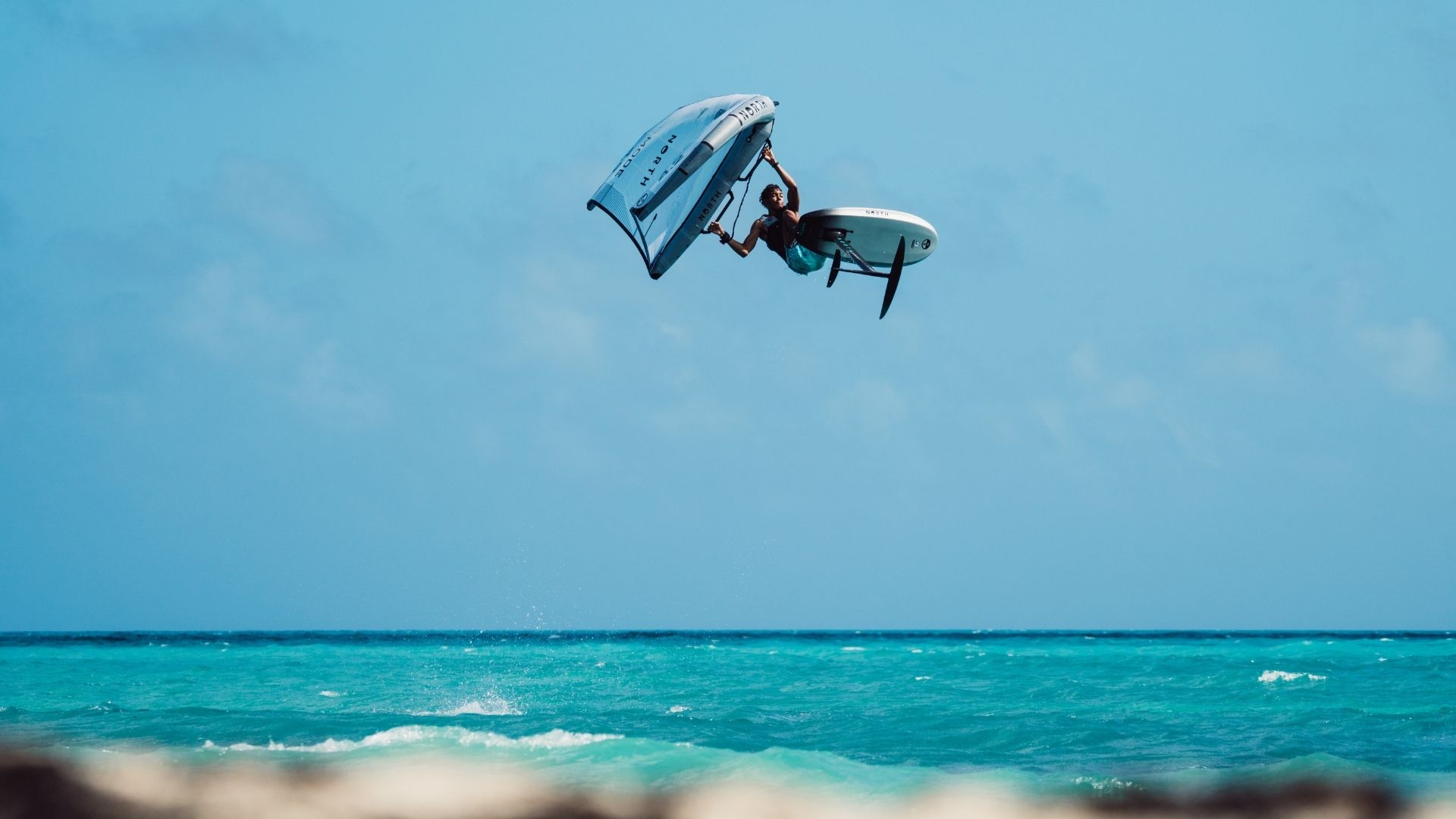
Antigua sits in the Caribbean trade wind belt, which means wingable wind for a big chunk of the year. Because a wing works in lighter conditions than a kite - and you're on a foil, so speed comes from technique as much as wind - the wing season here is genuinely longer than the kite season. Here's a straight local view of when to visit for a wing trip.
The Short Answer: November to July
The wing season in Antigua runs from November through July. The trade winds are generally east, sometimes northeast or southeast, and you can realistically expect ridable wind on 5 or 6 days out of 7 across that whole window.
December through May is the strongest and most consistent stretch - the same peak trade wind season the kiters chase. But because a wing gets you going in lighter conditions, November, June and July also fire on the wing where they'd be marginal on a kite.
If you want back-to-back sessions every day with plenty of range, aim for January to April. If you want warmer water, quieter beaches and a mellower vibe, look at November or late June.
Peak Season: December to May
Peak season delivers the biggest, cleanest trades - regularly 15-25 knots with squalls pushing higher. This is when you'll be on your smaller wings, sending downwinders, and progressing fastest if you're learning.
It's also the driest and sunniest time of year. Humidity drops, mornings are crisp, and rain tends to arrive as short refreshing squalls that clear quickly.
Shoulder Season: November & June-July
November and June/July are where winging really pulls ahead of kiting in Antigua. The wind is a touch lighter and more variable, so kiters end up on 12m and bigger while a foiler on a slightly larger wing has a great time. Glassy patches become downwind cruises rather than lost sessions.
These months are quieter on the water and cheaper on accommodation. If you're combining wing foiling with island exploration, they're an underrated choice.
Low Season: August to Mid-November
August through mid-November is Atlantic hurricane season and the quietest stretch on the water. Wind gets patchy and weather systems can disrupt trips. We generally pause new bookings during this window and use it for maintenance and travel.
You'll still get some good days - especially early and late in the window - but we wouldn't build a wing trip around it.
Month-by-Month Snapshot
November: Season kicks in for winging before it fully lands for kiting. Lighter, cleaner wind and quieter beaches.
December-March: Prime time. Strongest, most reliable trades, driest weather.
April-May: Still excellent. Slightly warmer, big kite/wing community in town.
June-July: Shoulder. Lighter winds, warmer water - often better for wing than kite.
August-Mid November: Hurricane window. Not recommended for a dedicated wing trip.
Water & Air
Water temperature in Antigua sits around 26-28°C (79-82°F) all year - board shorts or bikini every session, no wetsuit needed. A rash vest and impact vest are far more useful than neoprene.
Air ranges from around 24°C on the coolest peak-season mornings to about 31°C in summer afternoons. Sun protection and hydration matter more than warmth.
Frequently Asked Questions
Is the wing season longer than the kite season in Antigua?
Yes. A wing works in lighter wind than a kite, so November, June and July all deliver good wing days while being marginal for kiting.
What are the windiest months for winging?
December through March are the strongest and most consistent. April and May are still very good with slightly warmer conditions.
Do I need a wetsuit?
No. Water temperature sits around 27°C year-round. A rash vest and impact vest are more useful.
How far in advance should I book?
For peak season (December-May) book 4-8 weeks ahead. Shoulder season is usually more flexible.
Plan Your Antigua Wing Trip
Send us your dates and level and we'll help you build the trip - lessons, coaching sessions, or a Private Watersports Charter.
Related Guides
Related Experiences
Plan Your Adventure
No pressure - just three easy ways to work out what suits you best.